Commodore 1571
Gallery
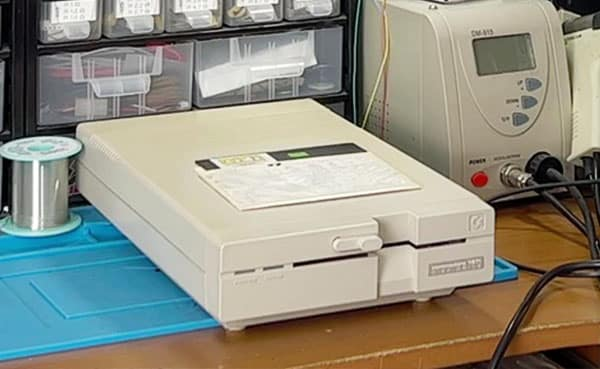
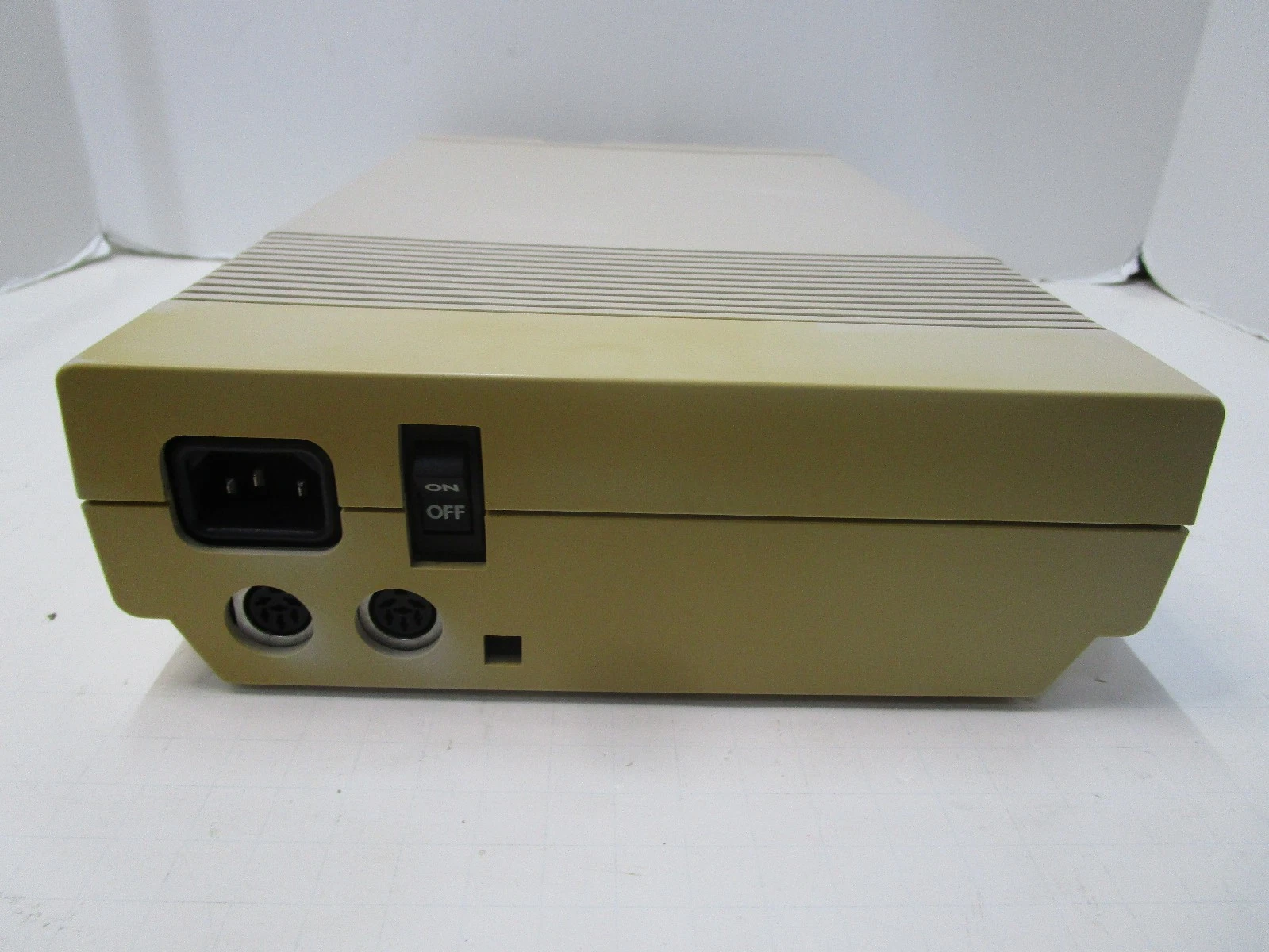
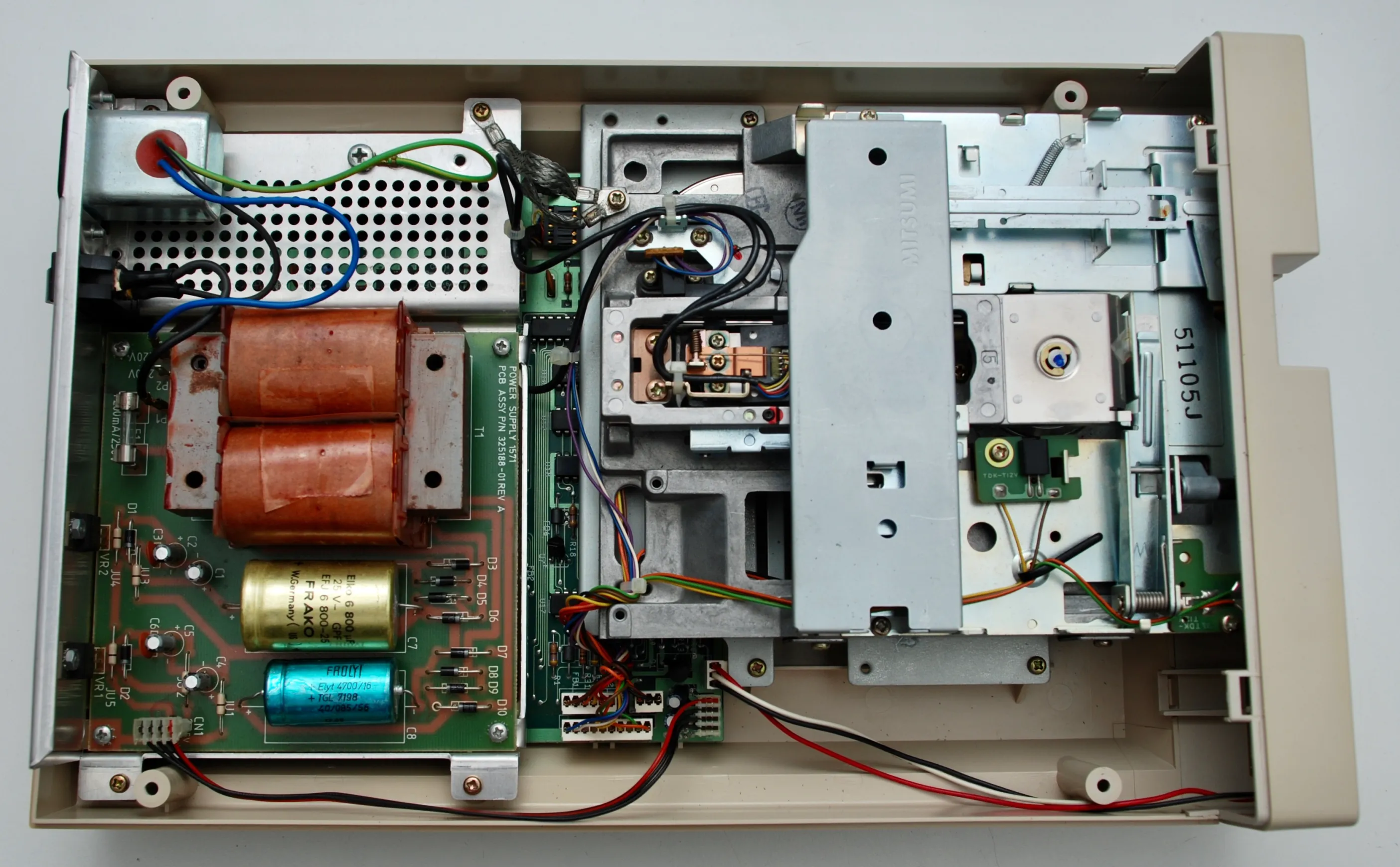
Commodore 1571 Floppy Drive
“The 1571 was our answer to the limitations of the 1541. By implementing true double-sided operation and a more efficient DOS, we were able to double the storage capacity while actually improving reliability. The 1571 was a perfect match for the C128, with its burst mode offering near-instantaneous loading times that really showed off what the new computer could do. It was one of those rare peripherals that was both more capable and more reliable than what came before.” - Bil Herd, Commodore Engineer
The Commodore 1571 was a 5.25” floppy disk drive released by Commodore in 1985 alongside the Commodore 128. As the successor to the popular 1541, the 1571 offered several improvements, most notably double-sided operation, which effectively doubled the storage capacity to 340 KB. The drive was designed to take full advantage of the Commodore 128’s capabilities, including a high-speed burst mode that could transfer data up to five times faster than the 1541. Its sleek, low-profile design and improved reliability made it a favorite among serious Commodore users.
Technical Specifications
Technical Specifications
- CPU
- MOS 6502A @ 2 MHz (switchable to 1 MHz for 1541 compatibility)
- Memory
- 2 KB RAM, 32 KB ROM (16 KB ROM, 2 KB RAM)
- Storage
- Double-sided, double density, 340 KB per disk (70 tracks, 683-768 sectors)
- Dimensions
- 21.5 × 36 × 8.3 cm (8.5 × 14.2 × 3.3 in)
- Weight
- 2.7 kg (6 lb)
- Power
- 100-120V or 200-240V AC, 20W
Features and Capabilities
Hardware Design
- Drive Mechanism: Half-height mechanism (Mitsubishi, Newtronics, or Chinon)
- Heads: Single head with automatic side selection
- Motor: 300 RPM spindle motor with direct drive
- Interface: Proprietary serial bus (IEC) with optional parallel port (1571 only)
- Power Supply: Internal switching power supply
Storage Format
- Capacity: 340 KB (formatted)
- Sectors per Track: 17-21 (variable)
- Tracks: 35 per side (70 total)
- Sectors per Disk: 683-768 (depends on formatting)
- Sector Size: 256 bytes
- Transfer Rate: ~400 bytes/second (normal), ~2,000 bytes/second (burst)
Performance
- Average Access Time: ~160ms
- Track-to-Track Seek Time: ~3ms
- Average Rotational Latency: 100ms
- Data Transfer Rate: 31,250 bps (normal), 125,000 bps (burst)
- Bit Cell Time: ~32μs (normal), ~8μs (burst)
Models and Variants
Original 1571 (1985-1986)
- Model Number: CBM 1571
- Features: Parallel port, metal chassis, 2 MHz CPU
- Compatibility: C64 and C128 modes
- Known Issues: Early units had firmware bugs
1571 (later production)
- Improvements: Fixed firmware, improved reliability
- Changes: Removed parallel port, plastic chassis
- Compatibility: C64 and C128 modes
1571CR (Cost Reduced)
- Features: Further cost-reduced design
- Changes: Simplified PCB, different mechanism
- Compatibility: C64 and C128 modes
1570 (European Version)
- Differences: No burst mode, different ROM
- Compatibility: C64 and C128 modes
- Rarity: Less common than 1571
Usage and Operation
Basic Commands
LOAD "*",8       : REM Load first program on disk (C64 mode)
DOS"UJ",8        : REM Enable burst mode (C128 mode)
DLOAD"PROGRAM"   : REM Load with fast serial
SAVE"@0:FILENAME",8 : REM Save with overwrite protection
HEADER"DISKNAME",ID : REM Format disk
Disk Commands
- COPY: Copy files between disks
- RENAME: Rename files
- SCRATCH: Delete files
- VALIDATE: Rebuild BAM
- BACKUP: Copy entire disk
- DUPLICATE: Copy disk with verification
Common Error Messages
- ?FILE NOT FOUND: File doesn’t exist
- ?FILE EXISTS: File already exists
- ?DISK FULL: No more space on disk
- ?WRITE PROTECT ON: Disk is write-protected
- ?SYNTAX ERROR: Command error
Technical Details
File System
- File Types: PRG, SEQ, USR, REL, DEL
- Directory Structure: Flat (no subdirectories)
- File Header: 16 characters max
- Block Availability Map: Track 36, sector 0
- Directory: Track 36, sectors 1-4
- BAM: Tracks free/used sectors on both sides
Disk Format
- Sector Interleave: 6 sectors (improved from 1541)
- GCR Encoding: More efficient than 1541
- Sync Mark: $89, $88, $88, $88, $88, $88, $88, $88
- Header ID: $08 (GCR encoded as $52, $52, $52, $52)
- Checksum: XOR of all bytes in sector
Hardware Registers
- $1800: Data register
- $1801: Status register
- $1802: Command register
- $1803: Track register
- $1804: Sector register
- $1805: Data register
- $1806: Status register
- $1807: Command register
Common Issues and Solutions
Common Problems
- Drive Not Responding
- Check power connection
- Verify serial cable is secure
- Try different device number
- Read/Write Errors
- Clean drive heads
- Check disk for damage
- Realign drive heads if necessary
- Single-Sided Operation in C64 Mode
- Use 1571 in 1541 emulation mode
- Format disk as double-sided in C128 mode first
- Error 74, Drive Not Ready
- Check disk insertion
- Verify spindle motor is spinning
- Check drive belt if applicable
Maintenance
- Head Cleaning: Use isopropyl alcohol and cleaning disk
- Lubrication: Spindle bearing
- Alignment: Requires alignment disk
- Capacitor Replacement: Common in aging units
Hacks and Modifications
Hardware Hacks
- JiffyDOS: Faster disk operating system
- SpeedDOS: Alternative DOS with faster transfer
- Parallel Cable: Speed up transfers on early models
- EPROM Upgrades: Custom firmware
- LED Mods: Additional status LEDs
Software Enhancements
- Burst Mode: Up to 5x speed increase
- Disk Utilities: Copy programs, disk doctors
- RAM Expanders: Use computer’s memory as disk cache
Legacy and Impact
Historical Significance
- Technical Achievement: First widely available double-sided drive for 8-bit computers
- Market Impact: Shipped with most C128 systems
- Hacking Culture: Inspired many programmers
- Demo Scene: Enabled more complex demos
Collectibility
- Value: $75-$250 depending on condition
- Rare Variants: Early models with parallel port
- Mint Condition: Boxed units command premium
- Restoration: Growing hobbyist community
Modern Alternatives
- SD2IEC: SD card adapter
- Pi1541: Raspberry Pi emulation
- 1571 Ultimate: FPGA-based solution
- Emulation: VICE, CCS64
Technical Documentation
Pinouts
Power Connector
1 - +5V DC
2 - Ground
3 - +12V DC
4 - Ground
IEC Serial Bus
1 - SRQ (Service Request)
2 - GND (Ground)
3 - ATN (Attention)
4 - CLK (Clock)
5 - DATA (Data)
6 - RESET
Parallel Port (early models only)
1 - D0
2 - D1
3 - D2
...
8 - D7
9 - STROBE
10 - BUSY
11 - ACK
12 - PAPER OUT
13 - SELECT
14 - AUTOFEED
15 - ERROR
16 - INIT
17 - SELECT IN
18-25 - Ground
ROM Versions
- Original ROM: Early version with bugs
- Revised ROM: Fixed common issues
- JiffyDOS: Third-party replacement
- DolphinDOS: Alternative DOS
Diagnostic Mode
- Power on while holding down the drive’s reset button
- LED will blink in patterns indicating test results
- Specific blink codes indicate different hardware issues
In Popular Culture
- Featured in computer magazines of the 1980s
- Subject of many YouTube restoration videos
- Appears in documentaries about 1980s computing
- Referenced in retro computing forums
Further Reading
About This Page
This page documents the technical specifications, operation, and legacy of the Commodore 1571 floppy disk drive. Information is based on official documentation, service manuals, and community knowledge.